The Ocean That Defines a Nation
The Maldives exists because of the ocean. The country’s 1,000-plus coral islands are divided into 26 atolls, each ringed by lagoons that seem lit from within.
This geography shapes everything: how people live, move, eat and even dream. It’s a nation built on water, where every horizon leans toward the sea.
A coastal guide to the Maldives begins with its relationship to the ocean. For Maldivians, the sea is not a boundary but a home. It provides food, transportation, and shapes culture. For visitors, it’s the central stage.
Arrival Over Water
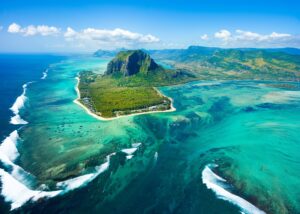
Most travellers arrive in the Maldives by plane, their first view a patchwork of turquoise and ultramarine. From above, the atolls appear impossibly delicate, as if they might dissolve back into the sea.
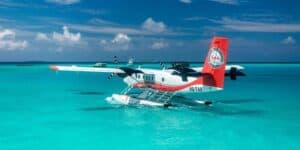
Once you land on Malé or a resort island, the pace changes. You travel onward by speedboat or seaplane, skimming over coral shallows and sandbanks that shift with the tide.
Each journey across water is its own small revelation. One island will appear lush with palms and glossy mangroves, another little more than a pale sand crescent kissed by waves.
These transitions prepare you for the kind of living that defines the Maldives: fluid, unhurried, in tune with the movement of water and wind.
The Many Faces of Maldivian Coasts
Not all islands are the same. Some are surrounded by lagoons so still they mirror the sky, while others open directly to the Indian Ocean with strong surf and deep reefs. Understanding these variations shapes how you experience the Maldives.
Resort Islands
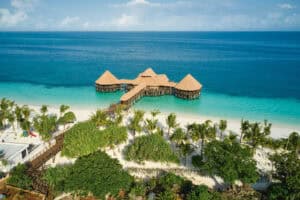
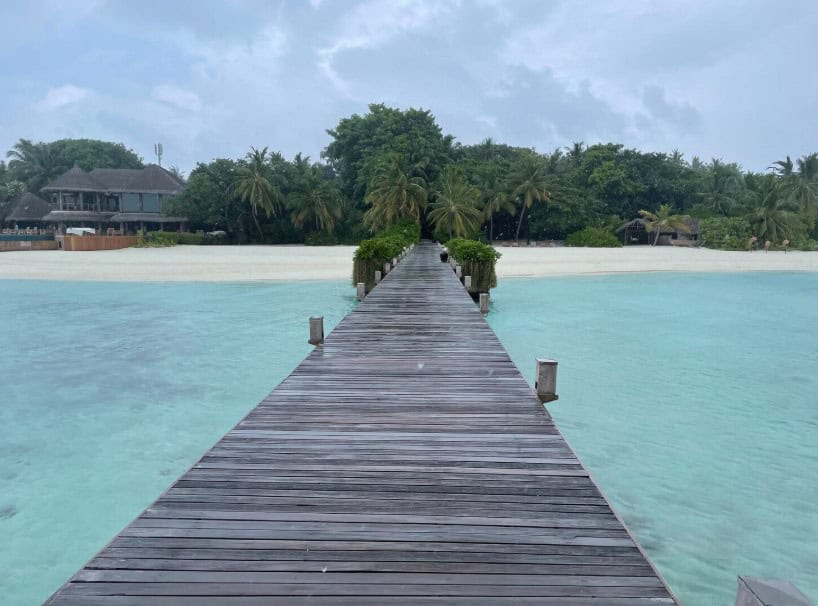
Privately operated islands dominate most visitors’ itineraries. They’re designed for seclusion, often with villas built over water or nestled behind coconut groves. Each has its own stretch of beach, protected by natural reefs that keep the waters calm and clear.
Here, the focus is on stillness and days defined by the sound of waves and the changing light.
Local Islands
Beyond the resorts, local islands offer a more grounded glimpse into Maldivian life. Fishing dhonis rock gently in small harbours, and sandy streets lead to public beaches where modesty is respected.
Staying here reveals how the coastline supports livelihoods: fish drying in the sun, boats being repaired, children chasing crabs along the tideline. The pace is slow, communal and connected to the sea’s daily moods.
Uninhabited Sandbanks
Between islands, sandbanks rise and fall with the tides, fleeting bits of paradise that appear for a few hours before slipping beneath the water again. They’re used for picnics, snorkelling, or simply the pleasure of standing alone where land and ocean meet so briefly.
Life Beneath the Surface
The true coastline of the Maldives lies below the waterline. The coral reefs form the country’s living edges – delicate structures built over thousands of years by tiny polyps that have created an entire world.
Snorkelling or diving here is like stepping into an open-air cathedral of light. Reefs burst with colour: violet anemones, parrotfish streaked with turquoise, and slow-gliding sea turtles that appear almost ancient in their calm.
The atolls’ coral walls are also home to larger visitors. Reef sharks patrol the outer edges, and manta rays circle cleaning stations with a grace that feels otherworldly.
While the underwater spectacle draws divers from across the globe, there’s a quiet way to these waters. Coral gardens hum with life, yet every sound feels softened, every movement suspended.
It’s here that the Maldives’ fragility becomes clear as the reefs are both breathtaking and vulnerable, facing threats from warming seas and bleaching events.
Responsible tourism plays a vital role in their preservation, from reef-safe sunscreen to supporting local conservation projects.
The Flow of Water and Light
Life on the Maldivian coast follows natural cycles rather than clock time. Dawn and dusk are the day’s anchors, each moment gilded by the changing quality of light.
Mornings begin gently. The sky blushes pink, and the air feels cool before the sun gathers strength.
Fishermen return with their catch of skipjack tuna, reef fish, sometimes even a gleaming mahi-mahi. Resorts prepare breakfast as the tide recedes, revealing ribbons of coral and seagrass.
Afternoons stretch long and languid. The light grows heavy, the air scented with salt and frangipani. Some take to kayaks or paddleboards to explore lagoons, while others drift into the shallows, letting the sea cradle them in its warm hold.
Evenings bring transformation. As the sun sets, the horizon burns gold before surrendering to deep indigo. Bioluminescent plankton sometimes light up the shoreline, turning the waves into liquid stars. Night belongs to the sea breeze and the distant sound of waves breaking on the reef.
Cultural Life Along the Shore
While the Maldives is often portrayed as an escape, it’s also a place rich with living culture. Traditional Maldivian life has always revolved around the coast, and this continues in subtle ways.
Fishing remains central to identity and survival. On local islands, dhonis line the harbours. Built using generations of craftsmanship, they are both art and utility. Fishermen navigate by the stars, though modern technology now assists the journey. The catch sustains families and flavours much of the island cuisine.
Coastal villages are social spaces as well. Afternoons see people gathering under breadfruit trees or near the jetties to talk, mend nets or play a game of baibalaa, a local form of tag.
Even architecture echoes the marine world: houses made from coral stone in older settlements, walls reflecting the pale shimmer of the lagoon.
Traditional bodu beru drumming performances often take place on the beach at night, their beats rising with the tide. What begins as slow and steady builds into a wild, joyful crescendo, mirroring the energy of the sea.
Food from the Coastline
The Maldivian palate is deeply coastal. With limited soil for agriculture, the diet relies heavily on the sea, supplemented by coconuts and imported staples.
Freshly caught tuna forms the heart of most meals – grilled, dried, or blended with coconut and chili to make mas huni, a breakfast favourite eaten with flatbread called roshi.
Every island adds its own touch. Some roast reef fish over open flames, while others steam fish in banana leaves or serve them in fragrant curries. Coconut milk softens the spice, and lime adds brightness.
Dining in the Maldives, whether at a beachside shack or an overwater restaurant, always feels elemental. You hear the waves as you eat, smell salt on the breeze, and taste the essence of the ocean in every bite.
It’s food that reminds you where you are and how deeply connected the sea is to every part of life.
Coastal Adventures
While most visitors come for rest, the Maldivian coast invites exploration. Each atoll offers its own experiences shaped by geography and local culture.
Snorkelling and Diving
The reefs around Ari, Baa, and North Malé Atoll are world-renowned for visibility and marine life. Drift dives along outer reef walls reveal dramatic drop-offs, while shallow lagoons invite easy snorkelling among corals and rays.
Surfing
Though often overlooked, the Maldives has excellent surf. Seasonal swells roll across southern atolls from May to October, drawing surfers to breaks like Chickens, Cokes and Sultans. These waves are powerful yet forgiving, often breaking over deep reef shelves that glow turquoise beneath the foam.
Sailing and Island Hopping
Traditional dhonis and modern catamarans offer another perspective on coastal life. Sailing between islands reveals the Maldives’ vast scale and subtle differences. Some shores are rimmed with mangroves, others with coral rubble or pure white sand.
Night Fishing
A favourite among locals, night fishing offers quiet excitement. Under moonlight, lines are cast from the back of a boat, phosphorescence swirling in the wake. The thrill of the catch mingles with the peace of being adrift beneath a sky strewn with stars.
Kayaking and Paddleboarding
In the still lagoons, non-motorised watercraft let you glide silently over coral gardens. The shallows are clear enough that you can see stingrays and baby reef sharks darting below – a reminder that in the Maldives, even the simplest activity becomes extraordinary.
Weather, Tides and the Seasons of the Sea
The Maldives’ equatorial location gives it a tropical climate with two main monsoon seasons. The northeast monsoon, from December to April, brings calm seas, light winds and dazzling clarity underwater – ideal for swimming, diving and sailing.
The southwest monsoon, from May to November, is windier and wetter, yet often more dramatic, with cloudscapes that make sunsets spectacular and waves that surfers seek.
Tides play a constant role in daily life. They shape when boats depart, when fish are caught, and even when sandbanks can be reached. Understanding the tides is part of appreciating how finely balanced this nation is with nature’s pulse.
Even during rain, the Maldives holds beauty. Showers often arrive suddenly and vanish just as quickly, leaving the air cool and the islands washed clean. The sea darkens to cobalt, then clears again, mirroring the sky’s every mood.
Sustainability and the Future of the Coast
The same ocean that gives life to the Maldives also poses its greatest challenge. Rising sea levels, coral bleaching and coastal erosion threaten both livelihoods and landscapes. Many resorts and local communities are investing in sustainability to protect the fragile environment that sustains them.
Coral restoration projects, for instance, replant broken fragments onto artificial reefs, helping damaged ecosystems recover. Solar power and desalination plants reduce strain on limited natural resources, while bans on single-use plastics help keep lagoons pristine.
Visitors play a role, too. Minimising waste and respecting marine guidelines ensures the Maldives remains as breathtaking for future generations as it is now. Sustainable travel here is a necessity born from the islands’ vulnerability.
Where Sea Meets Spirit
There’s something almost spiritual about standing on a Maldivian beach at dawn. The sand is cool underfoot, the air smells faintly of salt and hibiscus, and the horizon stretches without end. You feel both small and deeply alive, aware that you’re part of something vast and ancient.
The sea has shaped every grain of sand, every coral reef, every life here. To explore the Maldives’ coast is to understand a relationship between people and nature that feels timeless.
Some travellers find joy in the luxury, others in the simplicity. But all who come to these shores discover the same truth: the Maldives isn’t a place you visit once.
Practical Pointers for Coastal Wanderers
Before setting off, it helps to know a few essentials that make exploring the Maldivian coast smoother.
- Transfers: Inter-island travel is by speedboat, domestic flight or seaplane, depending on distance. Always plan arrivals to align with daylight hours, as most transfers stop at sunset.
- Reef Etiquette: Avoid touching corals or standing on them. Even a single step can damage decades of growth. Use reef-safe sunscreen to protect marine life.
- Local Customs: On inhabited islands, modest dress is appreciated. Swimwear is reserved for designated “bikini beaches.”
- Weather: Pack light, breathable clothing, but keep a rain jacket or poncho for sudden showers during the southwest monsoon.
- Connectivity: Some remote atolls have limited Wi-Fi, a blessing in disguise for travellers seeking true disconnection.
These small considerations add to rather than restrict your experience, allowing you to engage respectfully with the way of life on the islands.
The Endless Horizon
In the Maldives, every path eventually leads to the sea. The coastline is a place of renewal, connection and awe. From dawn’s first glimmer to the shimmer of plankton under night skies, the islands exist in constant dialogue with the ocean.
To follow the coast here is to move through a living landscape where water and life intertwine. The Maldives invites you not just to see its shores but to listen to them. It’s an invitation to dwell, if only for a moment, in perfect balance with the world.